

Flores Natural Park is located on Flores Island
The Flores Natural Park is located on Flores Island, was created on the 23rd of March and is one of the nine Island Natural Parks that make up the Network of Protected Areas of the Azores, the island of Flores joined the UNESCO World Network of Biosphere Reserves on May 27, 2009.
The Flores Natural Park has 9 categories of protected areas: Natural Reserve of Ilhéu de Maria Vaz, Natural Reserve of Morro Alto and Pico da Sé, Natural Reserve of Caldeiras Funda and Rasa, Natural Monument of Rocha dos Bordões, Protected Area for the Management of Habitats or Species of the Northeast Coast, Protected Area for the Management of Habitats or Species of Ponta da Caveira, Protected Area for the Management of Habitats or South and Southwest Coast Species, Central Zone and West Coast Cliffs Protected Landscape Area and North Coast Resource Management Protected Area
The Deep and Rasa Caldeiras located in the southern sector of the Central Plateau cover approximately 426 hectares with a maximum altitude of 773 meters.
The calderas constitute volcanic depressions and the bottom of each of them is occupied by a lagoon which, despite being very close together, are located at different elevations, namely 360 meters in Caldeira Deep and 530 meters in Caldeira Shallow.
In this area it is possible to observe endemic species such as laurel, bloodberry, mountain grape, ivy, peat bog areas such as moss, woodland and cedar.
With regard to birdlife, it is possible to see wagtails, blackbirds, herons, yellow-legged gulls and finches.
Its northern end is part of the Special Conservation Zone of the Central Zone: Morro Alto within the scope of the Natura 2000 Network.
The Ilhéu de Maria Vaz has an area of around 10 hectares, corresponding to the largest on the island, and is located just over 100 meters from the northwest coast of the island.
This islet is particularly covered by vegetation endemic to the Azores such as: heather, vidalia, and is visited by a significant number of seabirds such as terns, and considered an important nesting site for yellow-legged gulls.
In order to guarantee the maintenance of the site's unique characteristics and due to its high scientific interest, visitors are prohibited.
However, it is possible to see it when traveling along the Fajã Grande trail from Ponta Delgada or the Grande Rota das Flores.
Morro Alto and Pico da Sé are located in the Central Plateau, this area has around 1573 hectares and includes Morro Alto, the highest point on the island at 914 meters above sea level, and the Branca, Negra, Comprida and Seca calderas.
This area is marked by the presence of Caldeira Branca (a ring of tuffs with gentle slopes) and the sea-type explosion craters of Caldeiras Negra, Comprida and Seca, which, with the exception of the latter, have their bottoms occupied by a lagoon.
Caldeira Negra, with rocky and very steep slopes, is occupied by Lagoa Negra (or Lagoa Funda), with a maximum depth of 115 meters, the deepest in the Azores.
In this Natural Reserve, the most varied species of flora endemic to the Azores occur, with extensive carpets of peat bogs, and it is also possible to observe some birds.
The humid Atlantic climate works as an ecological modeler, creating the “fog zone” with very strong winds and high rainfall, creating forested peatlands dominated by cedar trees that constitute the largest Juniperus brevifolia forest in the Azores.
The peatlands extend along thick and continuous carpets of moss, which gives this high area a peculiar and distinct appearance from the rest of the island's landscape.
This area is the crossing point of the Miradouro das Lagoas trail as Poço do Bacalhau and is part of the Special Conservation Zone of the Central Zone: Morro Alto within the scope of the Natura 2000 Network, geosites of the Azores Geopark, and a Ramsar Site under the Ramsar Convention.
The Central Zone and Cliffs of the West Coast Located on the west coast and in the central zone of the island, this area has approximately 2565 hectares and a maximum altitude of 768 meters and is made up of volcanic cones, craters, slopes and cliffs.
In the Central Plateau area, peatlands of Sphagnum spp. predominate. (musgão) forested by Juniperus brevifolia (wood cedar).
The landscape of this area is dominated by the extensive, steep and imposing cliff that flanks the eastern side of the towns of Fajã Grande and Fajãzinha.
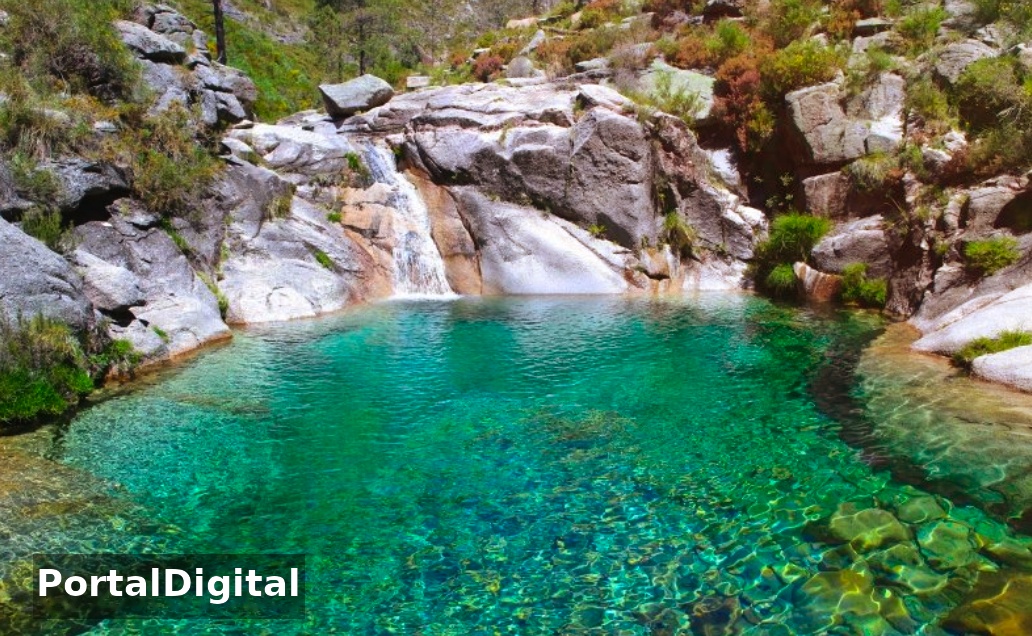
This fossil cliff, with a maximum altitude of around 300 meters, separates the aforementioned fajãs from the Central Plateau and has numerous waterfalls that feed permanent bodies of water at its base.
These bodies of water are locally called wells, the best known of which are Poço do Bacalhau and Poço da Ribeira do Ferreiro, also known as Lagoa das Patas and Poço da Alagoinha.
Rocha dos Bordões is a geological formation characterized by huge basalt columns, located in the site called Cabo Baixo das Casas, in the parish of Mosteiro, municipality of Lajes das Flores.
The place is an imposing geological accident, unique of its kind in the Azores, characterized by the solidification of basalt rock into high vertical prismatic columns with an elongated shape.
This rock originated from a thick layer of basalt that cooled quickly and was therefore subject to a prismatic disjunction, thus giving it the appearance of a huge set of stone ledges.
The Rocha dos Bordões Natural Monument has been included in the Flores Natural Park since 2011.
The Santa Cruz das Flores Forest Reserve is located in Lugar da Fazenda, in the parish and municipality of Santa Cruz das Flores, has an area of 3 ha and is located at an altitude of around 250 m.
With the aim of repopulating and maintaining trout populations in the island's six lakes and eight streams, the Flores Aquaculture Station was founded in 1968 at this location.
In 1984, Agricultural Technician Luís Paulo da Silva Camacho became responsible for the island's Forest Service, as head of division, and committed himself to transforming the Post into a new concept that could please the entire population.
In 1989, the Santa Cruz Farm Recreational Forest Reserve was created, encompassing not only the hectare occupied by the park but also the entire surrounding area.
In 2002, the current designation was approved by the Government Council as a fair tribute to the project's promoter.
Here it is possible to observe several species of trees and shrubs, and more than 80% are species introduced in the Azores, with emphasis on plants of Asian origin (around 30%) such as camellias, hibiscus, cryptomeria, hydrangea, conteira and azalea, pau-branco, cedar.
The Reserve has a variety of exotic birds such as chickens, pheasants, guinea fowl, peacocks, quails and turkeys, ducks and geese, small cage birds.
Among wild birds, examples of Azorean avifauna (native subspecies) associated with wooded areas and respective clearings are highlighted: blackbird (Turdus merula azorensis), starlet (Regulus regulus inermis), chaffinch (Fringilla coelebs moreletti), lavandisca (Motacilla cinerea patriciae), canary (Serinus canaria) and warbler (Sylvia atricapilla atlantis).
Finally, in the tanks it is possible to observe rainbow trout (Oncorhynchus mykiss) destined for reproduction and repopulation of the island's freshwater courses and lakes.
The Flores Natural Park has 9 categories of protected areas: Natural Reserve of Ilhéu de Maria Vaz, Natural Reserve of Morro Alto and Pico da Sé, Natural Reserve of Caldeiras Funda and Rasa, Natural Monument of Rocha dos Bordões, Protected Area for the Management of Habitats or Species of the Northeast Coast, Protected Area for the Management of Habitats or Species of Ponta da Caveira, Protected Area for the Management of Habitats or South and Southwest Coast Species, Central Zone and West Coast Cliffs Protected Landscape Area and North Coast Resource Management Protected Area
The Deep and Rasa Caldeiras located in the southern sector of the Central Plateau cover approximately 426 hectares with a maximum altitude of 773 meters.
The calderas constitute volcanic depressions and the bottom of each of them is occupied by a lagoon which, despite being very close together, are located at different elevations, namely 360 meters in Caldeira Deep and 530 meters in Caldeira Shallow.
In this area it is possible to observe endemic species such as laurel, bloodberry, mountain grape, ivy, peat bog areas such as moss, woodland and cedar.
With regard to birdlife, it is possible to see wagtails, blackbirds, herons, yellow-legged gulls and finches.
Its northern end is part of the Special Conservation Zone of the Central Zone: Morro Alto within the scope of the Natura 2000 Network.
The Ilhéu de Maria Vaz has an area of around 10 hectares, corresponding to the largest on the island, and is located just over 100 meters from the northwest coast of the island.
This islet is particularly covered by vegetation endemic to the Azores such as: heather, vidalia, and is visited by a significant number of seabirds such as terns, and considered an important nesting site for yellow-legged gulls.
In order to guarantee the maintenance of the site's unique characteristics and due to its high scientific interest, visitors are prohibited.
However, it is possible to see it when traveling along the Fajã Grande trail from Ponta Delgada or the Grande Rota das Flores.
Morro Alto and Pico da Sé are located in the Central Plateau, this area has around 1573 hectares and includes Morro Alto, the highest point on the island at 914 meters above sea level, and the Branca, Negra, Comprida and Seca calderas.
This area is marked by the presence of Caldeira Branca (a ring of tuffs with gentle slopes) and the sea-type explosion craters of Caldeiras Negra, Comprida and Seca, which, with the exception of the latter, have their bottoms occupied by a lagoon.
Caldeira Negra, with rocky and very steep slopes, is occupied by Lagoa Negra (or Lagoa Funda), with a maximum depth of 115 meters, the deepest in the Azores.
In this Natural Reserve, the most varied species of flora endemic to the Azores occur, with extensive carpets of peat bogs, and it is also possible to observe some birds.
The humid Atlantic climate works as an ecological modeler, creating the “fog zone” with very strong winds and high rainfall, creating forested peatlands dominated by cedar trees that constitute the largest Juniperus brevifolia forest in the Azores.
The peatlands extend along thick and continuous carpets of moss, which gives this high area a peculiar and distinct appearance from the rest of the island's landscape.
This area is the crossing point of the Miradouro das Lagoas trail as Poço do Bacalhau and is part of the Special Conservation Zone of the Central Zone: Morro Alto within the scope of the Natura 2000 Network, geosites of the Azores Geopark, and a Ramsar Site under the Ramsar Convention.
The Central Zone and Cliffs of the West Coast Located on the west coast and in the central zone of the island, this area has approximately 2565 hectares and a maximum altitude of 768 meters and is made up of volcanic cones, craters, slopes and cliffs.
In the Central Plateau area, peatlands of Sphagnum spp. predominate. (musgão) forested by Juniperus brevifolia (wood cedar).
The landscape of this area is dominated by the extensive, steep and imposing cliff that flanks the eastern side of the towns of Fajã Grande and Fajãzinha.
This fossil cliff, with a maximum altitude of around 300 meters, separates the aforementioned fajãs from the Central Plateau and has numerous waterfalls that feed permanent bodies of water at its base.
These bodies of water are locally called wells, the best known of which are Poço do Bacalhau and Poço da Ribeira do Ferreiro, also known as Lagoa das Patas and Poço da Alagoinha.
Rocha dos Bordões is a geological formation characterized by huge basalt columns, located in the site called Cabo Baixo das Casas, in the parish of Mosteiro, municipality of Lajes das Flores.
The place is an imposing geological accident, unique of its kind in the Azores, characterized by the solidification of basalt rock into high vertical prismatic columns with an elongated shape.
This rock originated from a thick layer of basalt that cooled quickly and was therefore subject to a prismatic disjunction, thus giving it the appearance of a huge set of stone ledges.
The Rocha dos Bordões Natural Monument has been included in the Flores Natural Park since 2011.
The Santa Cruz das Flores Forest Reserve is located in Lugar da Fazenda, in the parish and municipality of Santa Cruz das Flores, has an area of 3 ha and is located at an altitude of around 250 m.
With the aim of repopulating and maintaining trout populations in the island's six lakes and eight streams, the Flores Aquaculture Station was founded in 1968 at this location.
In 1984, Agricultural Technician Luís Paulo da Silva Camacho became responsible for the island's Forest Service, as head of division, and committed himself to transforming the Post into a new concept that could please the entire population.
In 1989, the Santa Cruz Farm Recreational Forest Reserve was created, encompassing not only the hectare occupied by the park but also the entire surrounding area.
In 2002, the current designation was approved by the Government Council as a fair tribute to the project's promoter.
Here it is possible to observe several species of trees and shrubs, and more than 80% are species introduced in the Azores, with emphasis on plants of Asian origin (around 30%) such as camellias, hibiscus, cryptomeria, hydrangea, conteira and azalea, pau-branco, cedar.
The Reserve has a variety of exotic birds such as chickens, pheasants, guinea fowl, peacocks, quails and turkeys, ducks and geese, small cage birds.
Among wild birds, examples of Azorean avifauna (native subspecies) associated with wooded areas and respective clearings are highlighted: blackbird (Turdus merula azorensis), starlet (Regulus regulus inermis), chaffinch (Fringilla coelebs moreletti), lavandisca (Motacilla cinerea patriciae), canary (Serinus canaria) and warbler (Sylvia atricapilla atlantis).
Finally, in the tanks it is possible to observe rainbow trout (Oncorhynchus mykiss) destined for reproduction and repopulation of the island's freshwater courses and lakes.